

Changing MerCruiser Sterndrive Oil
A MerCruiser sterndrive that runs too long on old or contaminated oil rarely shows it subtly. Shifting becomes less crisp, bearings take more strain, and if water gets into the oil, damage can escalate quickly. That's why changing MerCruiser sterndrive oil isn't a job to postpone until after the season or only tackle once a problem is already noticeable.
Why changing it on time makes such a difference
Inside the sterndrive, gears, bearings, and seals work continuously under load. That doesn't happen in a clean, dry environment like with many car parts, but in a marine application where water, temperature swings, and periods of inactivity all play a role. That's exactly why the condition of the oil matters so much.
Fresh oil doesn't just lubricate, it also helps carry away wear particles and protects the gears under heavy load. Once oil ages, or gets mixed with water, that protective effect drops off. On an Alpha One or Bravo drive, that can lead to expensive overhauls that could often have been prevented with a timely oil change and a good check of the seals.
There's also a practical difference between boats that sail a lot and boats that sit idle for long periods. Many hours on the water mean more thermal load. Long periods of inactivity increase the chance of moisture and ageing rubber playing a role. In both cases, regular oil changes remain wise.
When should you change MerCruiser sterndrive oil?
The safe rule of thumb is at least once a year, usually at the end of the season or before winter storage. It's also wise to change the oil if you don't know when it was last done, if the oil looks milky, or if you find metal particles on the drain plug's magnet.
With intensive use, sportier boating, or use in salt water, a shorter interval is often smarter. The same applies to a boat that has previously had a seal, propeller shaft seal, or bellows problem. In that case you want to be able to check more quickly whether water is getting in again.
Not sure whether a change is needed yet? The general rule is: checking is good, but replacing is often cheaper than guessing. Sterndrive damage can escalate quickly in cost, especially during peak season when your boat is out of action and parts are needed right away.
What the old oil really tells you
When draining, don't just look at the quantity, but especially at the condition of the oil. Dark oil isn't necessarily alarming on its own, as long as the texture is still even. Milky or grey oil usually points to water contamination. That doesn't automatically mean total damage, but it does mean you need to look further at seals, plug gaskets, or other leak points.
If you see small metal flakes on the magnet, that can occur to a limited extent under normal use. Larger pieces, a noticeable amount of metal, or glittering oil are a different story. In that case, internal wear on gears or bearings is often already underway. Simply changing the oil won't fix that.
A sharp, burnt smell is also a signal. That can point to overheating or excessive load. Think of boating with the wrong propeller load, too little oil, or an internal problem preventing parts from running smoothly.
Changing MerCruiser sterndrive oil step by step
This job is manageable for many handy boat owners, as long as you work carefully and use the right oil and seals. The most important thing is that the sterndrive is upright and that you fill from the bottom up. If you don't, air gets trapped and you won't get the oil level right.
Start by safely positioning the boat on the trailer or in a stable working position. Make sure the drive is in the vertical position. Have catch material ready and work cleanly, since you want to avoid dirt getting in or around the fill openings.
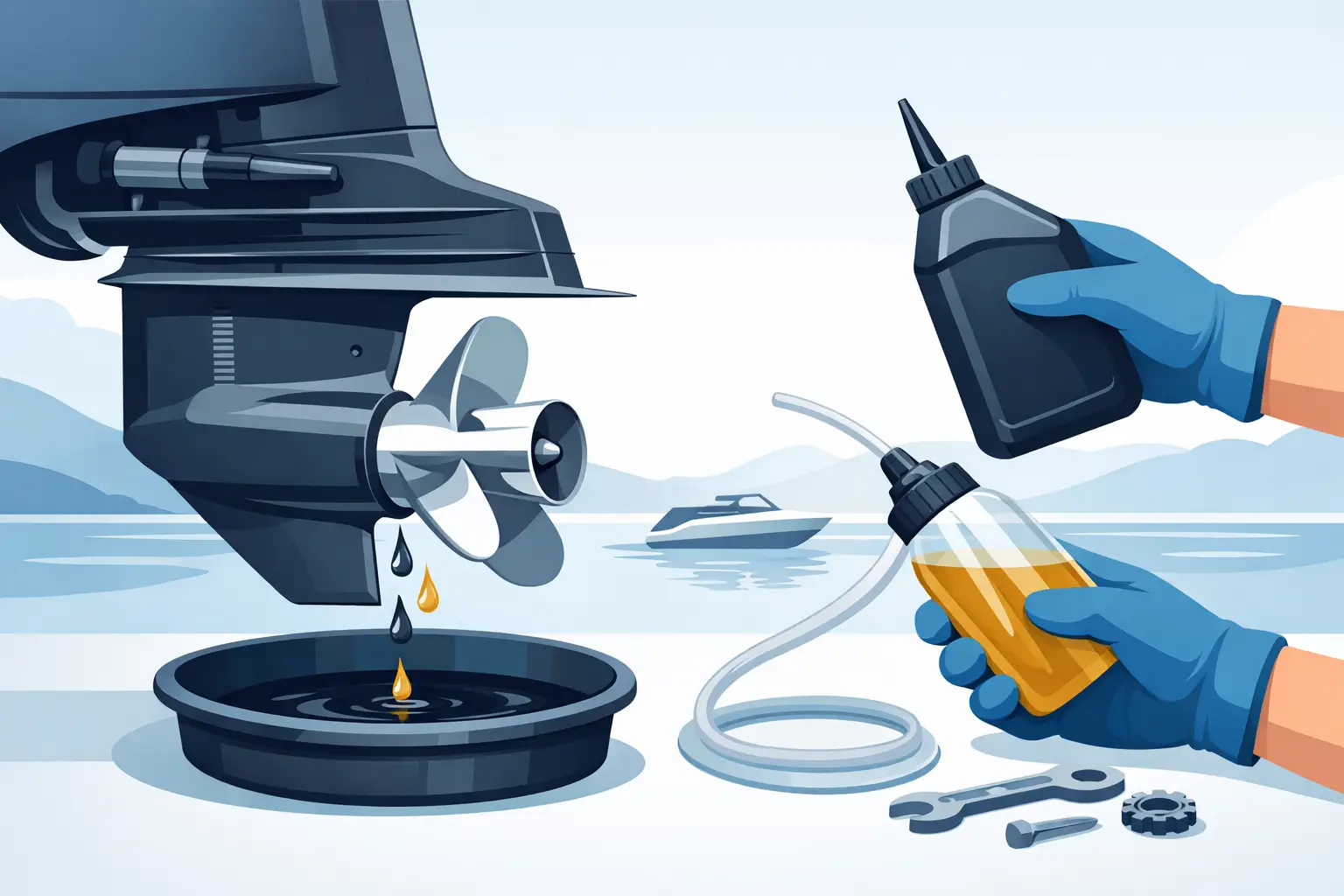
First loosen the lower drain/fill plug, then the upper vent plug. The oil can now drain out completely. Let the sterndrive drain calmly and take the time to assess the old oil. At the same time, check the plugs and replace the sealing rings if that's specified or if they're damaged.
Then fill with the correct sterndrive oil through the lower opening. This is usually done with a pump or a bottle with a fill adapter. You pump until the oil appears at the upper opening without air bubbles. Only then do you refit the upper plug first. Next, remove the fill hose from the bottom and immediately fit the lower plug. This limits oil loss and keeps the level correct.
Wipe everything clean and check after a short period that there's no visible leakage around the plugs. A test run followed by a fresh visual check gives extra peace of mind.
Which oil do you use?
This is where things regularly go wrong. Not every gear oil is suitable for a MerCruiser sterndrive. The correct marine gear lube is developed for high load and the specific conditions of a sterndrive. Especially with Alpha One and Bravo, that's not a minor detail but a condition for proper lubrication and protection.
So use oil that matches the specific sterndrive type and the factory specification. Original MerCruiser or Quicksilver oil is a logical choice here, but there are also good quality replacement options. Ultimately it comes down to compatibility, load resistance, and reliable protection, not just the lowest price per bottle.
If you're not sure which oil, plug gasket, or fill adapter you need, it's wise to check that first based on your drive and serial number. That prevents buying the wrong thing and later discussions about a problem that was actually caused by the wrong oil.
Common mistakes when changing the oil
The most common mistake is filling through the upper opening. That seems faster, but often gives an incorrect level and trapped air. Reusing old sealing rings is also asking for leaks. A small weep around the plug seems harmless, but can definitely affect the oil level over time.
Another mistake is just changing the oil without looking further when the oil was watery. That postpones the real cause. Water in the sterndrive comes from somewhere. Often via a seal, sometimes via a damaged propeller shaft, fishing line behind the propeller, or simply a poorly sealing plug.
Wear is also sometimes judged too optimistically. A bit of metal on the magnet isn't immediate cause for panic, but a lot of shine or coarse particles is no longer a normal maintenance picture. In that case, inspecting the sterndrive is more useful than just putting in new oil and carrying on.
Alpha One and Bravo - there are differences
When changing MerCruiser sterndrive oil, it matters which type of drive you have. Alpha One and Bravo differ in construction, load, and sometimes also in the details of maintenance and parts. Bravo drives are often under higher load, especially with heavier or more powerful engine combinations. That makes the condition of the oil even more important.
Usage also plays a role. A gently used family boat on fresh water requires something different than a sporty set-up that's driven hard or regularly sits in salt water. That's why general advice is useful but not always sufficient. The right answer often lies in the combination of drive, use, and maintenance history.
When to do it yourself and when to have it checked?
Doing it yourself is fine if you work technically carefully and know what to look out for. It's a good moment to check the oil, inspect the plugs, and pick up early signs of wear. For many boat owners, that's exactly the reason to do part of the maintenance themselves.
But there's also a limit. If there's water in the oil, if you find metal particles, if the sterndrive makes noise, or if shifting feels off, it's no longer just about changing the oil. At that point, diagnosis becomes more important than changing the oil again. At that stage you want to look specifically at seals, bearings, gears, and any consequential damage.
That's exactly where the added value of a specialist lies, one who doesn't just supply parts but also knows how that drive wears, leaks, and gets repaired in practice. At MerCruiser-onderdelen.com, we notice every day that customers have often already figured out a lot themselves, but still want certainty about the right oil, plugs, seals, or a suspicious wear pattern.
How to prevent bigger problems
Simply schedule the oil change into your annual maintenance. Don't wait until the oil looks bad or the sterndrive starts making noise. Also regularly check for fishing line behind the propeller, damage to the propeller shaft, and signs of leakage around plugs and seals. That takes little time and can save a lot of trouble.
If your boat comes out of the water for winter preparation, that's often the best moment. You'll immediately see whether there's water in the oil, and you prevent contaminated or moist oil from sitting in the sterndrive all winter. That's especially important with frost and with drives that already have some years of use behind them.
Good maintenance of a MerCruiser sterndrive isn't a spectacular job, but it is one of those tasks that makes the difference between worry-free boating and unexpectedly being stuck. Change it on time, look critically at what comes out, and take doubt seriously, that's usually the cheapest repair you can do.


