

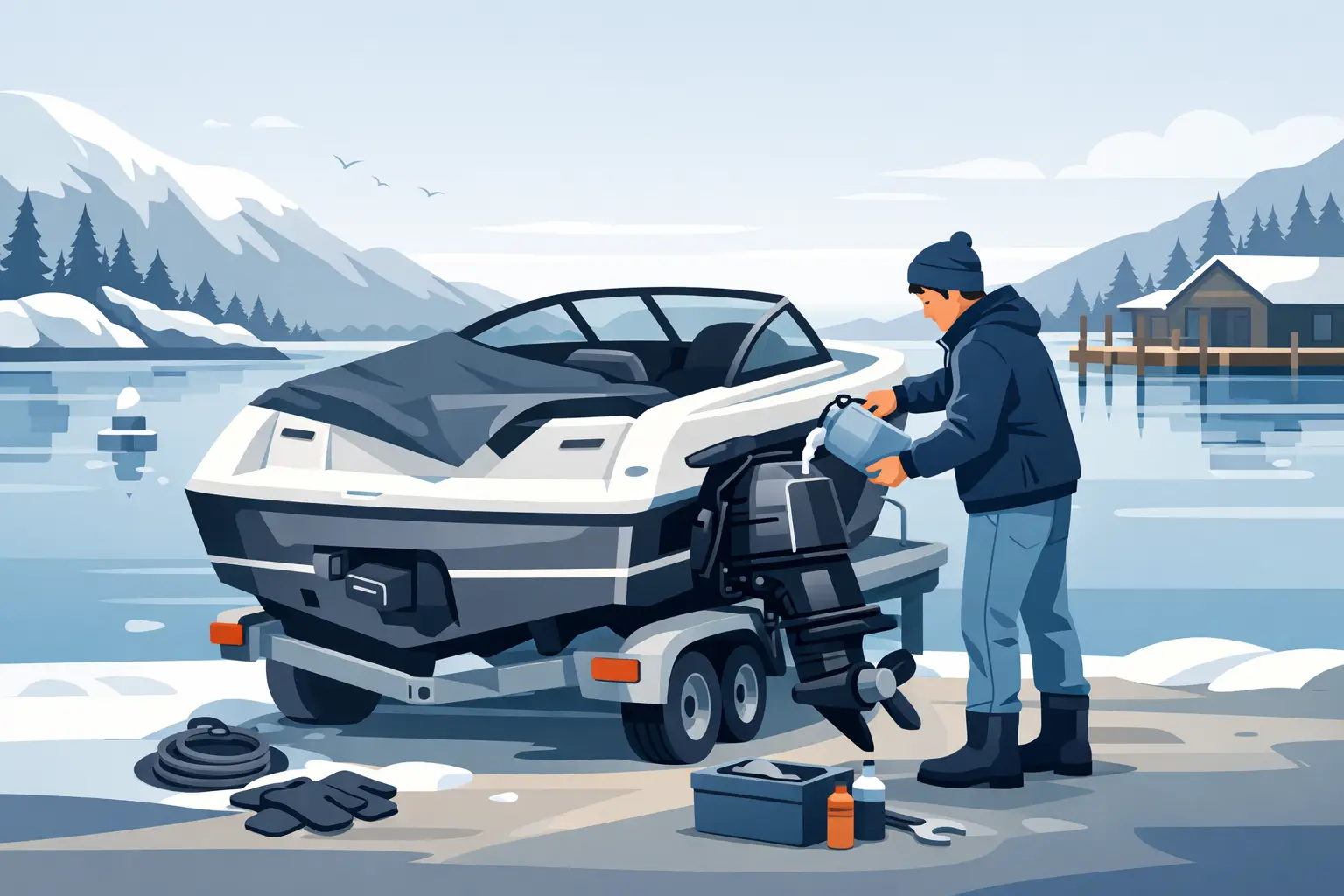
Winterizing a MerCruiser Boat
Most frost damage doesn't happen during a harsh winter, but at the moment a MerCruiser wasn't quite properly laid up. A bit of leftover water in the block, old oil in the crankcase, or a forgotten fuel filter is often enough. Anyone who takes winterizing a MerCruiser boat seriously prevents costly damage to the engine, manifolds, cooling system, and sterndrive.
Why winterizing a MerCruiser needs extra attention
A MerCruiser is tough, but not forgiving when water is left where it shouldn't be. Especially with inboard sterndrive engines, and certainly with engines that have a closed cooling system combined with a raw water circuit, things often go wrong in the details. Many owners think that just "draining the water" is enough. In practice, it depends on the engine type, the cooling system, the condition of the impeller, and whether the engine is prepared on the water or ashore.
On top of that, winterizing is more than frost protection. Oil that stays contaminated in the engine all winter can accelerate internal corrosion. Fuel that sits idle for months ages. Rubber parts dry out, batteries drain, and the sterndrive can quietly end up with moist oil. Those are exactly the problems that cause starting trouble, overheating, or expensive overhauls in spring.
Winterizing a MerCruiser boat - start with the right approach
The best order is simple: first bring the engine up to temperature, then change the oil, preserve, and only drain or run antifreeze through the system last. Winterizing a cold engine is possible, but less precise. Warm oil drains better and contamination comes out more easily with it.
First check which system you have. A MerCruiser with full raw water cooling needs a different approach than an engine with a heat exchanger. A 4-cylinder, V6, or V8 can also differ from each other in drain points, hoses, and sensors. So don't work by feel, but based on the exact engine type and serial number.
Change engine oil and oil filter first
First let the engine run up to operating temperature. Then change the engine oil and replace the oil filter right away. This isn't a step to postpone until spring. Old oil contains combustion residue, moisture, and acids that can cause internal damage over the winter.
Use the correct oil specification for your MerCruiser and pay attention to the capacity per engine variant. Too little oil is harmful, but overfilling is too. After filling, always check the level again once the engine has run briefly.
Protecting the fuel system against inactivity
Petrol that sits for a long time loses quality. That's why it's wise to add a fuel stabiliser before the engine runs for the last time. That way the treated mixture also reaches the lines, pump, and carburettor or injection system.
At the same time, replace the water-separating fuel filter. Especially on boats stored in a damp environment, water in the fuel is a well-known cause of poor starting in spring. While you're at it, also check hose clamps, fuel lines, and any porous connections.
Properly winterizing the MerCruiser's cooling system
This is where most mistakes happen. Just briefly running the engine on a hose doesn't automatically mean every part is protected. On a MerCruiser, the block, exhaust manifolds, coolant passages, circulation pump, and sometimes the oil cooler or power steering cooler all need to be included in the check.
On a raw-water-cooled engine, fully draining is essential. Open all the correct drain points and check that water actually comes out. On older systems, those points can be clogged with rust or scale. In that case it looks like it's been drained, while in reality water is still sitting in the block. So carefully clear drain openings if flow seems doubtful.
Many owners then choose extra protection with antifreeze suitable for winter storage. That's wise, but only if the system has first been correctly drained or it's clear the antifreeze has reached the entire path. Antifreeze in a system that's still partly filled with water gives an unpredictable mix ratio. Then you think you're protected, while the freezing point remains too high.
A closed cooling system isn't maintenance-free
With a closed system, it's often forgotten that only the engine block is protected by coolant, and that the raw water side still needs attention. The outside water circuit, the heat exchanger, hoses, and manifolds can therefore still suffer frost damage if not treated properly.
Also check the condition and concentration of the coolant in the closed part. If it's old, contaminated, or unknown, it's better to change it in good time. Don't just mix different types of coolant together.
Don't skip the sterndrive and drive unit
Anyone who only looks at the engine misses an important part of the winter service. The sterndrive of an Alpha One or Bravo drive deserves at least as much attention. Change the gear lube and pay attention to the colour and texture of the old oil. Milky oil points to water ingress. Don't wait until the new season for that, since standing moisture in the sterndrive can damage bearings and gears.
Check the condition of the propeller shaft right away and whether there's fishing line behind the propeller. That last point in particular is often overlooked and can cause leakage via the seals. Also check the anodes. If they're depleted, replace them immediately. Corrosion doesn't stop just because the boat sits idle.
The drive's bellows also deserve attention. Cracks in the exhaust bellows, U-joint bellows, or cable bellows mean a risk of water entering the boat or the drivetrain. That's not a cosmetic point, but a technical risk you'd rather resolve in winter than in the middle of the boating season.
Impeller, battery, and electrical parts
The impeller is a classic point of discussion. Should it come out for winter? That depends on age, use, and your plans for spring. If the impeller has already been in use for a season or longer, replacing it is often the wisest choice. An impeller that goes into winter half worn regularly causes cooling problems in spring, right at the moment you want to go boating again.
Ideally, take the battery out of the boat, or disconnect it and keep it charged with a suitable maintenance charger. Don't leave a battery sitting half-flat for months. That significantly shortens its lifespan. At the same time, check battery terminals, earth cables, and fuse holders for oxidation.
Lightly spray electrical connections that are sensitive to moisture with a suitable protective product if needed, but do so in a targeted way. Too much product in the wrong places actually attracts dirt.
Internal preservation of the engine
On petrol engines, internal preservation with fogging oil or a similar protection is often worthwhile, especially if the boat sits idle for a long time. That protects the cylinders and internal metal parts against surface rust. The exact method differs between carburetted and fuel-injected engines. It's important here not to simply copy a general method from a different engine type.
Also check the spark plugs. If they're due for replacement, winter is the logical moment. That way you won't start the spring with doubts about ignition or poor cold starting.
Common mistakes when winterizing a MerCruiser boat
The biggest mistake is assuming every MerCruiser is the same. That's not true for drain plugs, cooling circuits, or the service parts used. A second mistake is cutting corners on small parts. A cheap filter, wrong impeller, or incorrect gasket can ultimately cost more than the price difference is worth.
Also often seen: the engine gets drained, but the battery is left flat, the fuel isn't stabilised, and the sterndrive doesn't get fresh oil. Then the boat looks winterized, while in reality several weak points have been left unaddressed.
DIY or have it done?
For handy owners, a lot can be done yourself, provided it's done to the correct specifications. If you have experience changing oil, replacing filters, and recognising cooling systems, you can carry out a large part of it yourself. If you're unsure about drain points, cooling routing, or the correct parts, checking isn't a luxury but simply sensible.
Especially with an unknown maintenance history, a recently purchased boat, or signs like moisture in the sterndrive oil, rusty water from drain points, or starting problems, a thorough winter service is the best investment. That way you know exactly where you stand and prevent surprises in spring.
At mercruiser-onderdelen.com, we often see that owners only start looking for the right parts after damage has occurred. Especially for winter maintenance, it's smarter to have the right filters, gaskets, impeller, anodes, gear lube, and ignition parts ready beforehand. That works faster, prevents downtime, and you know the parts match your engine or drive.
Properly laying up a MerCruiser for winter isn't ultimately a complicated trick, but precise work. Anyone who spends an extra hour now on the right steps often saves themselves many times that in time, money, and hassle once the boating season starts again.


